Liver cirrhosis is a serious, progressive condition that damages your liver tissue. This can further lead to life-threatening complications. In the UAE, health insurance plays a critical role in managing treatment costs associated with liver damage. However, the coverage depends on whether the condition is pre-existing, the type of plan, and the policy terms.read more
Written ByMousree DasSenior Content Writer (Expertise - Health and Travel Insurance)
Mousree Das
Senior Content Writer (Expertise - Health and Travel Insurance)
Mousree Das is a Senior Content Writer with a focused expertise in Health Insurance and Travel Insurance. She entered the insurance space in 2022 and has since built over 4 years of UAE industry experience, writing and updating 3000+ articles across 2000+ health and travel insurance topics, from plan comparisons and claims processes to visa-linked coverage rules. She makes the intimidating world of insurance easier to understand.
Reviewed ByToshita ChauhanBusiness Head - General Insurance
Toshita Chauhan
Business Head - General Insurance
Driving growth, partnerships, and digital distribution across the UAE’s insurance landscape. Focused on scaling B2C channels, building high-impact teams, and unlocking value through data-led strategy and product innovation. Passionate about transforming legacy insurance with tech, speed, and customer obsession.
Information on this page is for general guidance only - not personalised financial or medical advice.
Health Insurance UAE Plans
Full Access
Dubai Insurance
Plan NameValue N4 (Remnto)
Medical Cover (AED)250,000
Starting FromAED 2,114/Yearly
NetworkDubai Care
Full Access
Cigna
Plan NameHealthguard Regional
Medical Cover (AED)2,750,000
Starting FromAED 12,981/Yearly
NetworkGeneral
Full Access
GIG Gulf (Previously AXA)
Plan NameGlobal
Medical Cover (AED)7,500,000
NetworkIn-house A1
GP Clinic
Takaful Emarat
Plan NameECARE BLUE
Medical Cover (AED)150,000
Starting FromAED 1,209/Yearly
NetworkE CARE Blue
Specialist Clinic
Orient Takaful Insurance
Plan NamePlan 5
Medical Cover (AED)1,000,000
Starting FromAED 1,561/Yearly
NetworkNEXTCARE RN3
Specialist Clinic
RAK Insurance
Plan NameNextcare RN3
Medical Cover (AED)1,000,000
Starting FromAED 1,617/Yearly
NetworkNEXTCARE RN3
Specialist Clinic
Orient Insurance
Plan NameHealth Plus - Plan 5
Medical Cover (AED)1,000,000
Starting FromAED 1,617/Yearly
NetworkNEXTCARE RN3
Specialist Clinic
Adamjee
Plan NameNAS WN
Medical Cover (AED)1,000,000
Starting FromAED 2,228/Yearly
NetworkNAS – WN (OP restricted to Clinics)
Full Access
Sukoon Bupa
Plan NameSelect
Medical Cover (AED)6,239,000
NetworkPremium Network
Plans shown as per selected filters. T&Cs apply
Plans shown as per selected filters. T&Cs apply
What is Liver Cirrhosis?
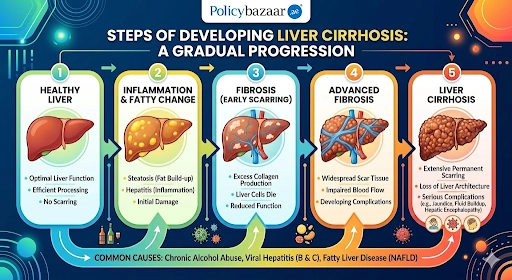
Liver cirrhosis is basically an advanced stage of liver disease. Here, the scar tissue replaces the healthy liver tissue. This affects the liver’s ability to function. Note that the condition gradually develops over the years due to chronic liver damage.
There are stages when the health condition progresses. It starts with inflammation, followed by fibrosis. Eventually, it results in cirrhosis if not treated properly. In severe cases, it leads to end-stage liver disease, where a liver transplant may be the only treatment option.
Disclaimer: This content is purely informational and not a substitute for professional medical consultation. Kindly consult your physician for medical concerns or queries.
Does Health Insurance Cover Liver Cirrhosis in UAE?
Yes, most health insurance plans in the UAE cover liver cirrhosis. As a general rule, comprehensive insurance policies cover critical illnesses. However, it’s still advisable to look into the policy wording thoroughly to confirm the coverage specifics.
Generally, liver cirrhosis falls under a pre-existing or chronic condition category, which directly impacts coverage:
UAE regulations ensure that residents can still obtain health insurance even with pre-existing conditions
Policies may have a waiting period of 6 months for pre-existing conditions before covering treatments related to such conditions
Some basic plans may not fully cover advanced liver diseases or transplants, especially if the condition was diagnosed before policy purchase
Comprehensive plans are more likely to include liver cirrhosis or end-stage liver disease as part of covered conditions
What are the Inclusions of Liver Cirrhosis Coverage?
Health insurance plans generally cover the following for liver cirrhosis:
Hospitalisation expenses
Doctor consultations and specialist visits
Diagnostic tests (blood tests, imaging, biopsy)
Medications and prescribed treatments
Daycare procedures and follow-ups
Coverage for liver transplant
What are the Exclusions of Liver Cirrhosis?
Even with medical insurance in UAE, certain treatments and conditions related to liver cirrhosis may not be covered. Some of them include:
Treatment during the waiting period for pre-existing cirrhosis
Undisclosed liver conditions at the time of policy purchase
Experimental or non-approved treatments
Alcohol-related liver damage
💡Failure to disclose medical history can lead to claim rejection or policy cancellation.
What are the Symptoms of Liver Cirrhosis?
Liver cirrhosis often develops silently in its early stages. However, as the disease progresses, symptoms become more noticeable. Some of the key symptoms of this condition include:
Fatigue and weakness
Loss of appetite
Nausea or vomiting
Swelling in legs or abdomen (ascites)
Yellowing of skin and eyes (jaundice)
Easy bruising or bleeding
Confusion or memory issues
What are the Major Causes of Liver Cirrhosis?
Liver cirrhosis can develop due to several long-term conditions and habits. Here is an overview of the major ones:
Chronic alcohol consumption
Hepatitis B or C infections
Non-alcoholic fatty liver disease
Obesity and diabetes
Autoimmune liver diseases
Genetic disorders
How is Cirrhosis of the Liver Diagnosed?
Doctors use a combination of tests to diagnose liver cirrhosis:
Blood tests to assess liver function
Imaging tests such as ultrasound, CT scan, or MRI
Liver biopsy (in some cases)
Endoscopy to check for complications
Is There a Treatment for Liver Cirrhosis?
Treatment depends on the stage and severity of the disease:
1. Early-stage management
Lifestyle changes (diet, alcohol cessation)
Medications to control symptoms and underlying causes
2. Managing complications
Diuretics for fluid retention
Antibiotics for infections
Procedures to control internal bleeding
3. Advanced stage
Hospitalisation and intensive care
Liver transplant (in severe cases)
How to Prevent Liver Cirrhosis?
While cirrhosis may not always be preventable, you can still cut down the risk of developing this disease. Here’s what you can do:
Limit alcohol consumption
Maintain a healthy weight
Manage diabetes and cholesterol
Get vaccinated for hepatitis
Take regular health check-ups
Avoid unnecessary medications
Final Thoughts
Liver cirrhosis is difficult to deal with. It requires long-term medical care and financial planning. Make sure to go for regular check-ups if you have any liver-related health conditions. As liver cirrhosis is an end-stage condition, taking care of your health can prevent you from developing the illness.
With valid medical insurance, you can go for regular consultations and diagnostic tests without paying upfront. However, make sure to buy a comprehensive plan, disclose your medical history, and understand inclusions and exclusions to get the best deal that covers the high treatment costs of this condition.
Frequently Asked Questions
Is liver cirrhosis considered a pre-existing condition in UAE health insurance?
Yes. Liver cirrhosis, if diagnosed before purchasing the policy, is treated as a pre-existing condition under health insurance. It may be subject to waiting periods.
Can I get health insurance in the UAE if I already have liver cirrhosis?
Yes, you must buy medical insurance even if you have liver cirrhosis, as health coverage is mandatory in the UAE. However, if you already have the condition, the policy may include waiting periods, higher premiums, or limited benefits.
Does UAE insurance cover liver transplant for cirrhosis?
Yes, liver transplant is by default covered in health plans. However, if you’re receiving the transplant, your policy will cover only your expenses. The donor has to cover their costs themselves.
What is the waiting period for liver cirrhosis coverage?
The waiting period for liver cirrhosis coverage may go up to 6 to 12 months, depending on the insurer and policy.
Can claims be rejected for liver disease treatment?
Yes, especially if the condition was not disclosed during the application or falls under exclusions.
Which plans are best for liver cirrhosis coverage?
Critical illness plans and comprehensive health insurance policies offer better coverage for advanced liver conditions.
Last Updated : 19 Aug 2026Philippines Temporary Visit Visa (9a) for UAE ResidentsThe Philippines 9(a) visa covers stays over 30 days. See document requirements by visit purpose, how to apply from the UAE, and the rules for extending a stay.
Last Updated : 17 Sep 2026Buy Insurance in Installments UAE | 0% Interest via TabbySplit your health insurance premium into 4 monthly payments at 0% interest with Tabby. No minimum premium. Coverage starts day one. Available at Policybazaar.ae.
Last Updated : 09 Jun 2026How to Boost Immunity in Children Naturally | UAEBoost your child's immunity naturally with proper sleep, balanced diet, daily exercise, and timely vaccinations - no supplements needed in most cases.
Last Updated : 09 Jun 2026Digital Detox: Why Your Brain Needs a Break from ScreensDigital detox is a regular break from screens that reduces stress, improves sleep quality, and boosts productivity. Learn the signs you need one and how to start.
Last Updated : 08 Jun 2026PCOS Officially Renamed PMOS – What It Means for WomenPCOS is now officially PMOS – Polyendocrine Metabolic Ovarian Syndrome. Learn what this landmark 2026 name change means for 170 million women worldwide.
Last Updated : 03 Jun 202620-Minute Workouts for Busy Professionals | Stay Fit Fast4 proven 20-minute workout routines for busy professionals. HIIT, strength, office-friendly & fat-burning cardio — stay fit without long gym sessions.
Last Updated : 22 Sep 2026How to Check Medical Insurance Status with Emirates ID | UAECheck your UAE medical insurance status instantly using your Emirates ID — via DHA, DOH/TAMM, MOHAP, or your insurer's portal. Step-by-step guide, updated 2026.
Last Updated : 17 Sep 2026Best Health Insurance Companies in Dubai, UAE 2026Find the Top 10+ Health Insurance Companies in Dubai, UAE Offering Comprehensive Health Insurance Coverage and Exceptional Services at Affordable Prices.
Last Updated : 26 May 2026How to Check the Status of Your Health Insurance Online?The easiest way to get familiar with your plan details or check the active status is to do it online. Let’s figure out how to check if your health insurance plan is active online.
Last Updated : 08 Jan 2026Dental Insurance UAE: Dental Insurance Types, Coverage & BenefitsDental Insurance UAE: Know All about Dental Insurance, Types, Coverage & Benefits. Dental Insurance Covering Most of the Dental Treatments, You can Drop off Your Worries About Costly Therapies.
Last Updated : 11 Feb 2026Can You Buy Health Insurance for New Born Baby in UAE?Don't know whether you can buy medical insurance for new born baby in UAE? In this article we’ll share everything you need to know about health insurance for newborn baby.
Last Updated : 27 Nov 2025Where Can I Get Medical Help Without Having Health Insurance in UAE?Not everyone in the UAE can afford to buy a health insurance policy to avail of quality medical care benefits. To help out such people, we have listed here a few places and ways of getting medical help.

.webp)



 Reviews
 Mousree Das


 Information on this page is for general guidance only - not personalised financial or medical advice.











.png)

















.webp) Last Updated : 19 Aug 2026Philippines Temporary Visit Visa (9a) for UAE ResidentsThe Philippines 9(a) visa covers stays over 30 days. See document requirements by visit purpose, how to apply from the UAE, and the rules for extending a stay.
Last Updated : 19 Aug 2026Philippines Temporary Visit Visa (9a) for UAE ResidentsThe Philippines 9(a) visa covers stays over 30 days. See document requirements by visit purpose, how to apply from the UAE, and the rules for extending a stay. Last Updated : 17 Sep 2026Buy Insurance in Installments UAE | 0% Interest via TabbySplit your health insurance premium into 4 monthly payments at 0% interest with Tabby. No minimum premium. Coverage starts day one. Available at Policybazaar.ae.
 Last Updated : 09 Jun 2026How to Boost Immunity in Children Naturally | UAEBoost your child's immunity naturally with proper sleep, balanced diet, daily exercise, and timely vaccinations - no supplements needed in most cases.
 Last Updated : 09 Jun 2026Digital Detox: Why Your Brain Needs a Break from ScreensDigital detox is a regular break from screens that reduces stress, improves sleep quality, and boosts productivity. Learn the signs you need one and how to start.
 Last Updated : 08 Jun 2026PCOS Officially Renamed PMOS – What It Means for WomenPCOS is now officially PMOS – Polyendocrine Metabolic Ovarian Syndrome. Learn what this landmark 2026 name change means for 170 million women worldwide.
-(2)-(2).webp) Last Updated : 03 Jun 202620-Minute Workouts for Busy Professionals | Stay Fit Fast4 proven 20-minute workout routines for busy professionals. HIIT, strength, office-friendly & fat-burning cardio — stay fit without long gym sessions.
Last Updated : 03 Jun 202620-Minute Workouts for Busy Professionals | Stay Fit Fast4 proven 20-minute workout routines for busy professionals. HIIT, strength, office-friendly & fat-burning cardio — stay fit without long gym sessions. Last Updated : 22 Sep 2026How to Check Medical Insurance Status with Emirates ID | UAECheck your UAE medical insurance status instantly using your Emirates ID — via DHA, DOH/TAMM, MOHAP, or your insurer's portal. Step-by-step guide, updated 2026.
 Last Updated : 17 Sep 2026Best Health Insurance Companies in Dubai, UAE 2026Find the Top 10+ Health Insurance Companies in Dubai, UAE Offering Comprehensive Health Insurance Coverage and Exceptional Services at Affordable Prices.
 Last Updated : 26 May 2026How to Check the Status of Your Health Insurance Online?The easiest way to get familiar with your plan details or check the active status is to do it online. Let’s figure out how to check if your health insurance plan is active online.
 Last Updated : 08 Jan 2026Dental Insurance UAE: Dental Insurance Types, Coverage & BenefitsDental Insurance UAE: Know All about Dental Insurance, Types, Coverage & Benefits. Dental Insurance Covering Most of the Dental Treatments, You can Drop off Your Worries About Costly Therapies.
 Last Updated : 11 Feb 2026Can You Buy Health Insurance for New Born Baby in UAE?Don't know whether you can buy medical insurance for new born baby in UAE? In this article we’ll share everything you need to know about health insurance for newborn baby.
 Last Updated : 27 Nov 2025Where Can I Get Medical Help Without Having Health Insurance in UAE?Not everyone in the UAE can afford to buy a health insurance policy to avail of quality medical care benefits. To help out such people, we have listed here a few places and ways of getting medical help.




 Google Reviews