IDCW vs Growth: Which Mutual Fund Option Is Right for You?
Choosing between IDCW vs Growth is where many misunderstood decisions related to mutual funds happen. This is especially true for investors like UAE residents and NRIs investing for long-term goals like retirement, children’s education, or repatriation planning. At first glance, the choice looks simple: one option gives regular payouts, and the other focuses on long-term wealth creation.read more

4.7/5
44,602
 Reviews
Central Bank UAE Registration No.: - 123
Insurance Partners
Trusted Customers
Policies Sold

Get AED 1 Million*






Best Investment Plans in UAE
Some of the best Investment quotes in UAE & Dubai are:




Invest Smarter with Policybazaar.aeChoosing between IDCW vs Growth mutual funds isn’t just about payouts — it’s about aligning your investments with your long-term financial goals. At Policybazaar.ae, you can compare investment options, understand costs like direct growth vs direct IDCW, evaluate long-term returns, and get access to expert guidance. |
|---|
What is the Growth Option in Mutual Funds?
The Growth option is designed for investors who want their money to grow uninterrupted over time. Instead of receiving payouts, all earnings — whether from dividends, interest, or capital gains — are reinvested back into the fund. This keeps on increasing the Net Asset Value (NAV).
How Does the Growth Option Work?
Suppose a UAE-based investor invests AED 100,000 in an equity mutual fund (Growth option).
- NAV increases year after year as profits are reinvested
- No payouts are received
- Wealth compounds quietly in the background
After 10–15 years, the investor redeems units and receives the accumulated value, one-time, growth-focused.
Key Features of Growth Option
- No regular payouts
- Strong compounding effect
- Higher long-term NAV
- Tax triggered only at redemption
- Ideal for long-term financial goals

What is IDCW (Income Distribution cum Capital Withdrawal)?
The IDCW option provides periodic payouts, monthly, quarterly, or annually, depending on the scheme. These payouts may come from:
- Profits
- Income generated by securities
- Or even your original invested capital
That’s why SEBI renamed the old ‘dividend option’ to IDCW, making the mechanism transparent.
How Does IDCW Work?
- You invest an amount, say, AED 100,000
- Fund declares IDCW of AED 3 per unit
- You receive cash
- NAV falls by the payout amount
You get income, but your invested value reduces proportionally. This directly impacts IDCW vs Growth returns over time.
Key Features of IDCW Option
- Regular cash flow
- NAV reduces after every payout
- Tax may apply to each distribution
- Limited compounding
- Payout timing is fund-controlled
Let’s start with the difference between IDCW and Growth based on different criteria to help you make a decision easier —
Direct Growth vs Direct IDCW: Detailed Comparison
This table highlights the difference between IDCW and Growth clearly —
|
Parameter |
Growth Option |
IDCW Option |
|---|---|---|
|
Objective |
Long-term wealth creation |
Regular income |
|
Payouts |
None |
Periodic |
|
Earnings |
Reinvested |
Distributed |
|
NAV movement |
Grows steadily |
Drops after payout |
|
Compounding |
Strong |
Limited |
|
Taxation |
On redemption |
On every payout |
|
Control over cash flow |
Investor-controlled |
Fund-controlled |
Growth funds prioritise compounding, while IDCW prioritise cash flow.


Final Verdict: IDCW vs Growth
The IDCW vs Growth decision isn’t just about payouts. It’s about control, compounding, and clarity. Choose the option that matches how you want your money to work, not just how often it pays you. If you’re unsure, reviewing your goals with a structured investment plan can make all the difference.
- Growth is ideal for wealth creation
- IDCW is suitable for income needs
- Most investors benefit more from Growth + planned withdrawals
This makes understanding the difference between growth and IDCW more helpful to avoid costly mistakes and align investments with your life goals.
| Disclaimer: The information in this article is for general educational purposes only and should not be considered as financial, investment, tax, or legal advice. Mutual fund investments are subject to market risks, and past performance does not guarantee future returns. Policybazaar.ae does not provide investment advice but facilitates access to mutual fund and financial product information to help investors make informed choices. |
FAQs: IDCW vs Growth Mutual Funds
What is the full form of IDCW?
IDCW stands for Income Distribution cum Capital Withdrawal. It means payouts can come from the fund’s profits, income earned, or even the invested capital.
What is the difference between the IDCW option and SWP?
IDCW payouts are decided by the fund house, giving investors no control over timing or amount. SWP (Systematic Withdrawal Plan) allows investors to withdraw a fixed amount at chosen intervals in a more tax-efficient and predictable manner.
Can we convert the IDCW option to the Growth option?
Yes, this is done through a switch transaction within the same mutual fund scheme. However, the switch is treated as redemption and reinvestment, which may attract capital gains tax and an exit load.
Can I switch from IDCW to Growth?
Yes, you can switch from IDCW to Growth, but it is considered a redemption. This means capital gains tax may apply depending on the holding period and fund type.
Can IDCW be directly converted to Growth?
No. IDCW cannot be directly converted. You must redeem IDCW units and reinvest the amount into the Growth option, which can trigger taxation.
Which is better: Growth or IDCW?
Growth is better for long-term wealth creation as returns remain invested and compound over time. IDCW suits investors who need regular income and periodic liquidity.
How are IDCW and Growth options taxed?
Growth option is taxed only at the time of redemption under capital gains rules. IDCW payouts are taxed when received, making them less tax-efficient for long-term investors.
What is IDCW in mutual fund schemes?
IDCW pays investors periodic income from profits, income earned, or capital withdrawals. While it provides regular cash flow, it reduces the fund’s NAV after each payout.
What is the Growth option in mutual fund schemes?
Under the Growth option, profits and dividends are reinvested back into the fund. You receive returns only when they redeem units, allowing wealth to grow through compounding.
Is it possible to switch from IDCW to a Growth option?
Yes, switching is allowed but may involve exit load and capital gains tax. You should evaluate tax impact before making the switch.
Which is better: dividend reinvestment or growth?
Dividend reinvestment allows compounding through automatic reinvestment of payouts. Growth avoids payouts altogether and compounds more efficiently. Growth is generally preferred for long-term goals.
What is Growth vs IDCW in SIP?
Growth SIPs focus on long-term capital appreciation by reinvesting returns. IDCW SIPs provide periodic income but may reduce long-term wealth due to regular payouts.
What are the benefits of IDCW?
IDCW offers regular income, liquidity, and cash flow convenience. It can be useful for retirees or investors needing periodic payouts, though it may limit long-term compounding.
Should I invest in growth or value mutual funds?
Growth and value funds reflect different investment styles, not payout options. The choice depends on your risk tolerance, market outlook, and long-term financial goals.

More From Investment
- Recent Articles
- Popular Articles
- Last Updated : 18 Sep 2026What Is Investment? Meaning, Types & How It WorksWhat is investment? Learn the meaning of investment, how it works, common investment types, benefits, risks and how to get started.
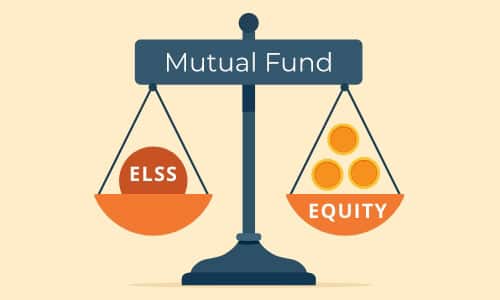 Last Updated : 18 Jun 2026ELSS vs Equity Mutual Funds: Key Differences, Benefits & Which is BetterCompare ELSS vs equity mutual funds. Understand the difference between ELSS and equity mutual fund investments, tax benefits, lock-in periods, liquidity, returns, and which option suits your financial goals better.
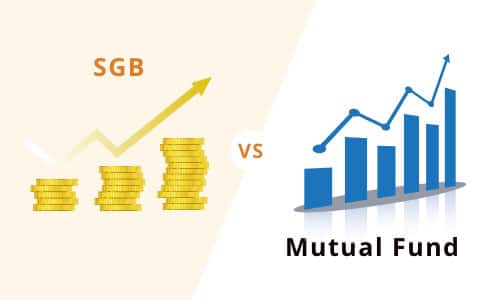 Last Updated : 18 Jun 2026SGB vs Mutual Funds: Which Investment Option is Better for UAE Expats in 2026Compare SGB vs mutual funds in 2026 for UAE expats and residents. Understand sovereign gold bonds vs mutual funds, returns, risks, taxation, liquidity, and which investment option suits your financial goals better.
 Last Updated : 18 Jun 2026Best SBI Investment Plans for 3 Years in 2026 for UAE NRIsDiscover the best SBI investment plans for 3 years in 2026 for UAE NRIs and expats. Compare SBI SIP plans, mutual funds, FDs, debt funds, and hybrid funds for stable returns and long-term growth.
 Last Updated : 04 May 2026Mutual Fund Interest Rates & Returns Explained | Average & High Return Mutual FundsUnderstand mutual fund interest rates and what drives returns. Learn about average mutual fund returns, high return mutual funds, and how NRIs can maximise long-term growth.
 Last Updated : 30 Apr 2026How to Start Investing at 25 with ₹30,000 Salary | Best Investment Plan for 25 Year OldLearn how to start investing at 25 with a ₹30,000 salary. Discover the best investment plan for 25 year old, SIP strategies, and where to invest for long-term growth from the UAE.

 Last Updated : 07 Aug 202610 Best Mutual Funds in UAE to Invest to Right NowDiscover the top 10 best mutual funds in UAE and Dubai for 2026. Compare performance, features, and find the best mutual fund investment in UAE for your goals.
 Last Updated : 08 Sep 2026Top 10 Best Trading Platforms in UAE, Dubai (2026)Explore the 10 best online trading platforms in the UAE, including eToro, Plus500, and Interactive Brokers. Learn about their features, benefits, and safety measures for both beginners and seasoned traders.
 Last Updated : 08 Sep 202615 Best Short Monthly Investment Plan in UAE with High ReturnsRecurring Deposits (RDs) are among the best monthly investment plans in UAE for those who prefer to save consistently over time.
 Last Updated : 02 Jul 2026Top 10 Best gold Shops to buy gold in Dubai, UAEHere we have listed down the top 10 gold shops to buy gold in the UAE that has a great reputation in the market and sell pure quality of gold.
 Last Updated : 10 Dec 2025 How to Invest AED 10,000 in UAE to Multiply Your Money?Explore the best investment plans in UAE's thriving market to invest your AED 10000 to help you turn your savings into a profitable venture.
- Last Updated : 08 Jul 2026Gold Rate in Abu Dhabi – 22K & 24K Gold Price in AEDCheck gold rate in Abu Dhabi for 18K, 21K, 22K, and 24K gold. View real-time gold prices per gram, historical trends, price charts, and expert insights before buying gold in Abu Dhabi.




 Reviews